Responding to a demand letter can be stressful and confusing, especially if it’s your first time dealing with legal threats.
From my experience as a lawyer, the most important thing is to stay calm and take the letter seriously. Ignoring a demand letter can lead to bigger legal problems and may even result in a lawsuit.
KEY TAKEAWAYS
When you get a demand letter, you should read it carefully to understand what the sender wants from you.
I always recommend replying in writing within the time they give, if possible, to show that you are taking things seriously and are willing to talk.
A well-crafted response can sometimes help avoid court and protect your interests, especially if you respond clearly and keep copies of all your communications.
If you ever feel unsure about what to do next, it’s a good idea to talk to a lawyer. As someone who has helped people with these letters before, I’ve seen how important it is to know your rights and think about your options before saying anything.
Understanding Demand Letters
Demand letters are formal legal documents with specific goals. They communicate requests, outline disputes, and can lead to serious legal action if ignored.
Purpose And Importance
A demand letter is used to set out what the sender wants and why. It often lays out the facts, explains the legal matter, and describes the type of compensation or action needed.
For business owners, sending a well-written demand letter can help resolve disputes faster without going to court. The letter also shows you tried to solve things professionally.
Keeping a professional tone is key in these letters. This helps keep communication clear and respectful, even if the subject is stressful. A well-crafted demand letter can be a useful tool to settle arguments before they grow into lawsuits.
When I write a demand letter, I make sure it explains the issue simply and lists what is expected next. This keeps things straightforward for everyone involved.
Types Of Demand Letters
Demand letters come in different forms depending on the situation. Some common kinds include those for unpaid debts, property damage claims, personal injury claims, breach of contract, and employment disputes.
For example, an obligee’s attorney might send a formal demand letter to a service provider who failed to meet obligations.
In disputes over credit cards, people use demand letters to ask for payment. Insurance company claims and requests about property damage often start with these letters too.
In job issues, a former employee could get a letter asking them to stop sharing company secrets or seeking the return of company property.
Each type of demand letter uses language that fits the dispute. I recommend you match your wording and detail to the kind of claim, as this affects how the sender of the demand letter views your response.
Common Legal Scenarios
You may receive a demand letter in more situations than you think. For example, if there is a car accident, the other driver’s insurance company may send a request for payment for damages. Businesses often get legal documents over unpaid invoices or broken contracts.
Sometimes, service providers send letters when there is non-payment, late payment, or breach of terms.
Property damage and personal injury claims are also common reasons. In disputes with former employees, a demand letter might warn against sharing private company information.
I have seen many problems resolved just by replying quickly and clearly to these formal communications. Taking them seriously helps avoid court and costly mistakes.
Steps To Take After Receiving A Demand Letter
When you get a demand letter, what you do next can affect your legal rights and even your finances. Acting quickly and carefully helps you make smart decisions about how to handle the situation.
Immediate Actions To Consider
Start by reading the demand letter as soon as you receive it. Check for any deadlines, the sender’s contact information, and what is being demanded.
Acting in a timely manner is important, as you usually have a set amount of time to respond.
Never ignore a demand letter. Letting it sit could lead to extra costs or even a lawsuit. As a lawyer, I always recommend letting the sender know in writing that you got the letter, even if you’re still preparing your answer.
Make a list of any steps required before the deadline, such as gathering documents or contacting a lawyer. Keeping organized at this stage can save you trouble later on.
Reviewing The Content
Go over the demand letter carefully, noting the main claims and requests. Look for details like the amount of money asked for, alleged events, or included evidence. Compare the sender’s claims to your own records or knowledge.
Highlight any points that seem confusing, unfair, or incorrect. I suggest creating a summary table, like the one below, to stay organized:
| Not aware of the incident | Your Notes/Records | Documentation Needed |
|---|---|---|
| Payment for Services | Disputed, no invoice received | Past invoices, emails |
| Property Damage | Not aware of incident | Receipts, photos, insurance |
If documents are mentioned, locate copies and keep them together in one place. Reviewing the content early gives you time to look for missing details.
Assessing The Validity Of The Demand
Next, decide if the claims have legal merit. Are you actually responsible for what’s described? Has the sender provided enough proof or legal reason for their demand?
Check if there are legal requirements that apply, such as notice periods or ways to resolve disputes. I often remind clients that just getting a demand letter does not mean you have to pay or agree right away. The facts and the law both matter.
At this point, think about your side of the story. Write down a timeline or gather supporting evidence that shows your version of events. Doing so helps you explain your case later and avoid mistakes.
Seeking Professional Legal Advice
Contacting a good lawyer is usually a good idea, especially if the amount at stake is large, the issues are complex, or attorney’s fees are mentioned in the letter. A lawyer can explain your legal rights, possible risks, and the best interests of your case.
Share all relevant documents and your notes with your lawyer. I’ve seen many people benefit from even a short legal review before responding. Sometimes, a simple demand can be handled quickly, while other times it needs more attention.
Ask questions about any next steps, possible defenses, and the costs of handling the matter, including if you might have to pay the other side’s attorney’s fees. Making informed decisions early can often save money and stress down the line.
Crafting An Effective Response

Responding to a demand letter is important because your answer can stop the problem from getting worse or even going to court.
Best Practices For Writing A Response Letter
When you reply to a demand letter, your response should always be professional. Start with the date, addresses, and a clear subject line.
This shows that your response letter is a formal legal document. Clearly reference the original demand letter and state your purpose for responding.
Use simple, direct language. Avoid personal attacks, threats, or rude remarks. If you disagree with some or all of the obligee’s claims, explain why using facts and attach any extra documents you can.
I always recommend keeping your letter polite, even if you strongly disagree with the demands.
List all important points one by one. If there is a deadline to respond, mention whether you can meet it or need more time. It’s best to get professional advice before sending your letter if you’re unsure about what to say.
Checklist for writing:
- Include names, addresses, and dates
- Respond directly to each claim
- Stay respectful and clear
- Attach supporting documents
- Ask for more information if things are unclear
Addressing Legal Arguments And Unreasonable Demands
If the demand letter has strong or challenging legal arguments, address the facts and law they mention. Respond to each argument clearly.
Use real examples or legal rules to support your side. Be honest—don’t try to hide mistakes, but don’t admit to things you didn’t do.
If they ask for full payment or an action you think is unfair, you can say no and explain your reasons. I always tell my clients to point out if a demand seems unreasonable, looks like a deceptive act, or isn’t backed up by facts.
Say if you think their demands are made in bad faith or are not allowed by law.
If you have a counter-offer, suggest it politely. You can ask for more time or more documents to review. If you do not agree but want to avoid a legal fight, you can offer to talk or negotiate.
Ensuring Proper Delivery And Record-Keeping
How you send your response matters. Always use a method that gives you proof that the obligee got your letter. I strongly recommend using certified mail or another tracked service so you get a receipt. This helps if someone says they didn’t get your response.
Save copies of everything—your response, attachments, and mailing receipts. Store these together in a safe place. This can be very important if things go to court or if you need to prove you acted in good faith.
Organize your files with dates and notes about any calls or emails. As a lawyer, I tell people this is the best way to avoid confusion and protect yourself during any legal process that follows.
Legal Options And Next Steps
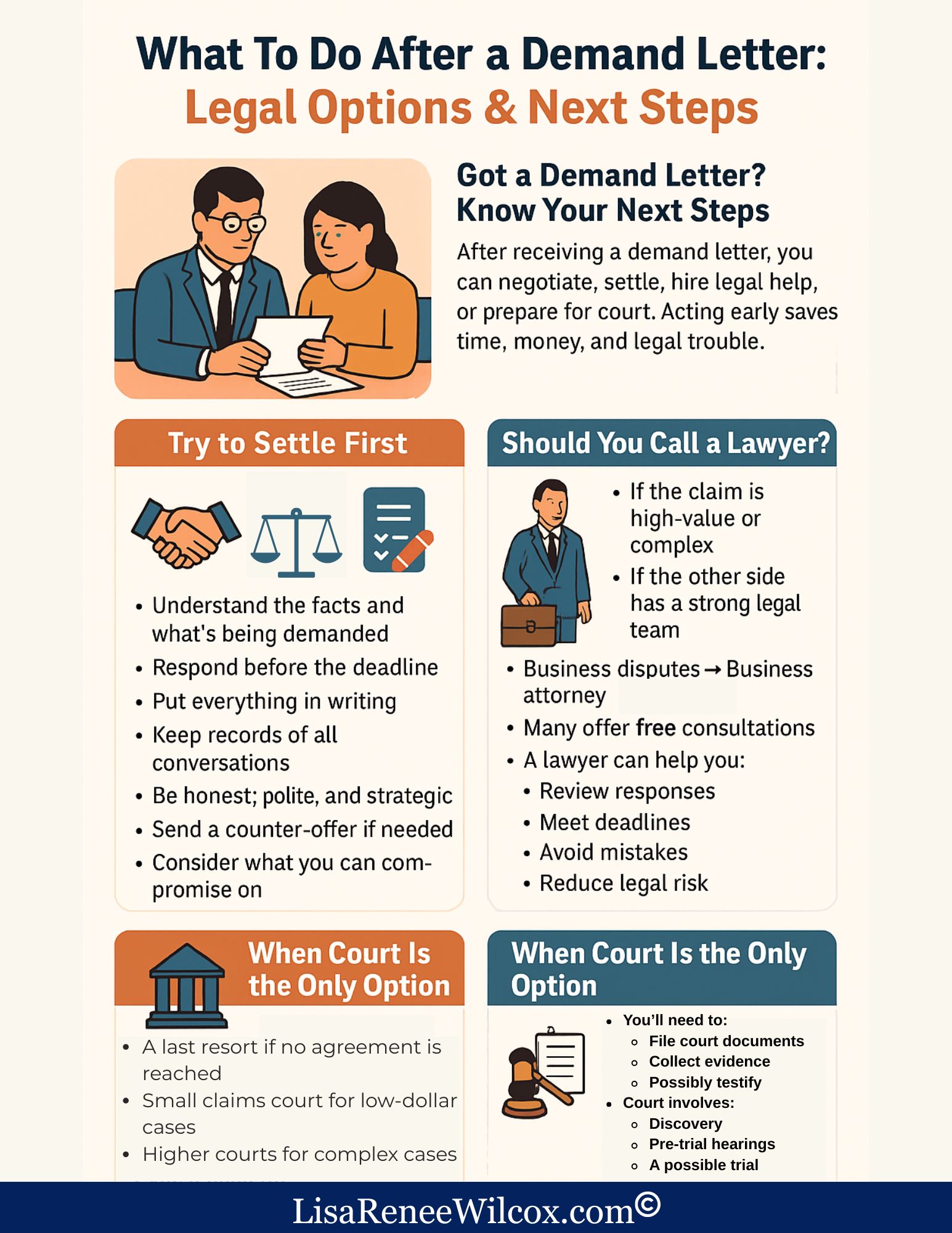
After you get a demand letter, you have a few paths to choose from. You can try to talk things out, find a settlement, hire legal help, or prepare for court if you must.
Acting quickly and choosing the best way to respond can prevent unnecessary litigation and extra legal fees.
Negotiation And Settlement Strategies
Negotiating after a demand letter can save time and money. You may avoid a court case by settling, whether the demand involves a car accident, a business dispute, or another legal matter.
It helps to first understand the facts, your position, and what the other side is seeking.
If you start the negotiation process, put everything in writing. Respond before the response deadline and keep records of all talks. Sometimes, sending a counter-offer works well if you think their number is too high or their claims are not fair.
I always recommend being polite and honest during settlement negotiations because it builds trust and opens more options. It’s also smart to list out your main interests and decide which issues you can compromise on.
You might end up with a better outcome by working together, especially if insurance companies or business attorneys are involved. If you’re not comfortable, legal assistance can help you with drafting and reviewing settlement agreements.
When To Consider Legal Representation
You should consider hiring legal help if the amount of money is high, the case is complicated, or you feel outmatched by the other party’s legal team. Sometimes, law firms or insurance companies have years of experience, and going solo isn’t the best way.
You might want to look for a business attorney for company matters or a lawyer who focuses on personal injury lawsuits for accidents.
Many attorneys offer a free consultation, so it costs nothing to ask for their opinion on your options or the strengths of your case.
From my experience, clients get peace of mind when they have an experienced attorney review their legal response before sending it.
Good legal counsel can also help you meet deadlines, avoid mistakes, and understand what you may owe in legal fees. Don’t hesitate to use legal representation if you want to avoid legal risk or costly errors.
Potential Legal Actions And Proceeding To Court
If you can’t agree through settlement or negotiation, your next steps may involve court action. Legal action should be a last resort, since it is more expensive and takes longer.
You might end up in small claims court for smaller amounts or in higher courts for bigger, more serious cases.
If you go to court, you need to file documents, collect evidence, and be ready to possibly testify. The court process includes discovery, pre-trial hearings, and, sometimes, a full trial.
If you act quickly after receiving the demand, you have more legal options and better control of the timeline.
As a lawyer, I always tell clients that sometimes pushing back in court is the only way to protect their rights. Still, not every demand turns into a court case.
Talking with your attorney about potential outcomes and costs is the best way to make a smart decision before taking legal action.
Conclusion
Taking the first step to respond to a demand letter is important. A quick reply shows you are serious and organized. In my experience as a lawyer, a well-timed response can even help settle a legal dispute before it grows.
A clear demand letter response should focus on the main issues. Always include any relevant legal arguments. If you are unsure about what to write, reaching out for legal help or a free consultation is often the best way to protect your interests.
Using certified mail to send your response helps create a record that you answered the formal request. As someone who’s helped many clients, I recommend keeping copies of all legal documents exchanged during the process.
If the situation gets complicated, speaking with legal representation is smart. They can explain your legal options and guide you through the legal process, if needed.
A strong argument in your letter can make a difference if the matter goes to legal proceedings. In my work, I have found that showing you are ready and informed often leads to better results.
Frequently Asked Questions
How long do I have to reply to a demand letter I’ve received?
A demand letter will often have a set deadline in the letter, such as 7, 14, or 30 days. If there is no deadline listed, it’s still best to reply quickly, usually within a week or two.
Delaying your response may lead the sender to take legal action against you as the next step. It is important to check the letter for specific instructions about the deadline. If you’re unsure, responding within a week is usually a safe practice.
Is it possible to respond to a demand letter without involving a lawyer?
Yes, you are allowed to write your own response to a demand letter. However, having an attorney review your response is recommended if you think legal action is likely or if you feel nervous about what to say.
A lawyer’s help is especially useful in complicated cases, but for simple matters, you can respond on your own as long as you stay clear and polite.
What are the key elements to include when writing a response to a demand letter?
Your response should include a clear statement that you received the letter and that you understand the request. Then, address the main points raised in the letter, stating your side.
Be factual and include any documents, receipts, or agreements that support your response. Remain polite, avoid admitting fault unless you are sure, and make it clear what action you plan to take. Including evidence can make your response stronger.
After sending my response, what should I expect as the next step?
Once you send your reply, the other party may agree with your answer, negotiate further, or reject your position. Sometimes, if you and the other party cannot agree, they may start a lawsuit.
You should keep copies of all letters and documents you send or receive. The next step depends on how the other side reacts to your response.
What can I do if I do not receive any reply after sending a demand letter?
If you don’t get a reply within the time specified in your demand letter, you can try sending a follow-up letter or email as a reminder. If there is still no answer after more attempts, you may need to consider taking legal action, such as filing a lawsuit, especially if your claim is strong.
Not getting a response does not stop you from seeking your rights through the court.
Can you provide tips or examples for crafting an effective response to a demand letter for payment?
When responding to a demand letter for payment, state if you agree or disagree with the amount requested. If you plan to pay, mention how and when you will pay. If you disagree, explain why and include any proof to show your point.
Always write politely and keep your language simple and direct. Including payment records or past emails can help support your side.